SUSTAINABILITY AT ARCOLLAB
OVERVIEW
CERTIFICATIONS
COMMUNITY PARTNERS
IMPACT REPORTING
GOALS
SDG ALIGNMENT
POLICIES & DISCLOSURES
EXECUTIVE COMMITMENT: A MESSAGE FROM OUR LEADERSHIP
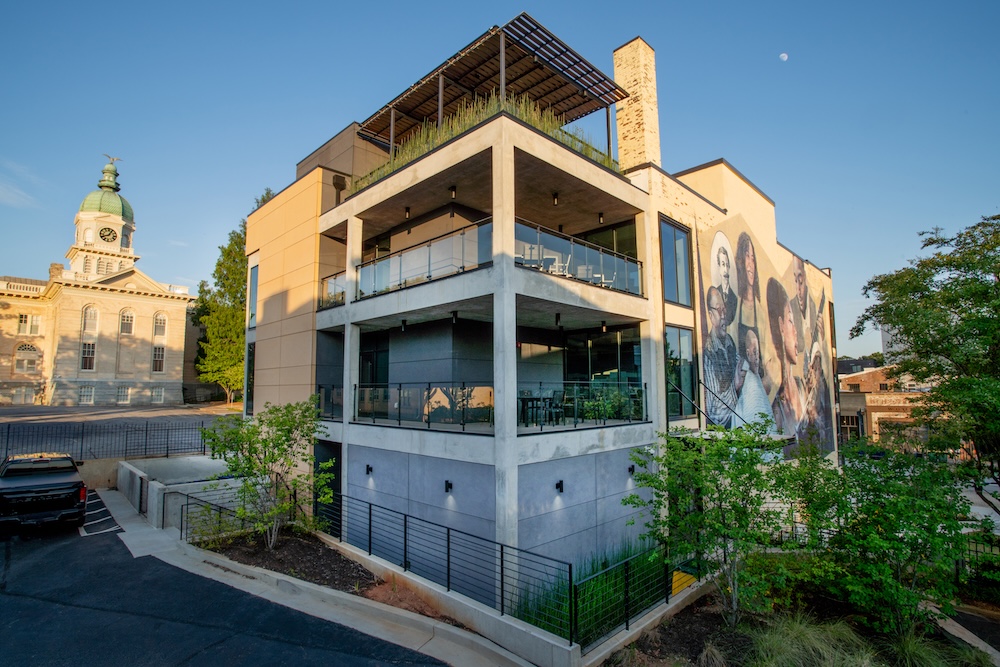
Arcollab strives to minimize our impact on the environment, with aspirations of carbon neutrality for our business operations and a healthy and respectful workplace environment for our employees. Furthermore, we aspire that our work reflects best practices for sustainable architecture and that our work contributes to the betterment of the communities in which we work, including advancing community sustainability goals.
OUR CORE MISSION
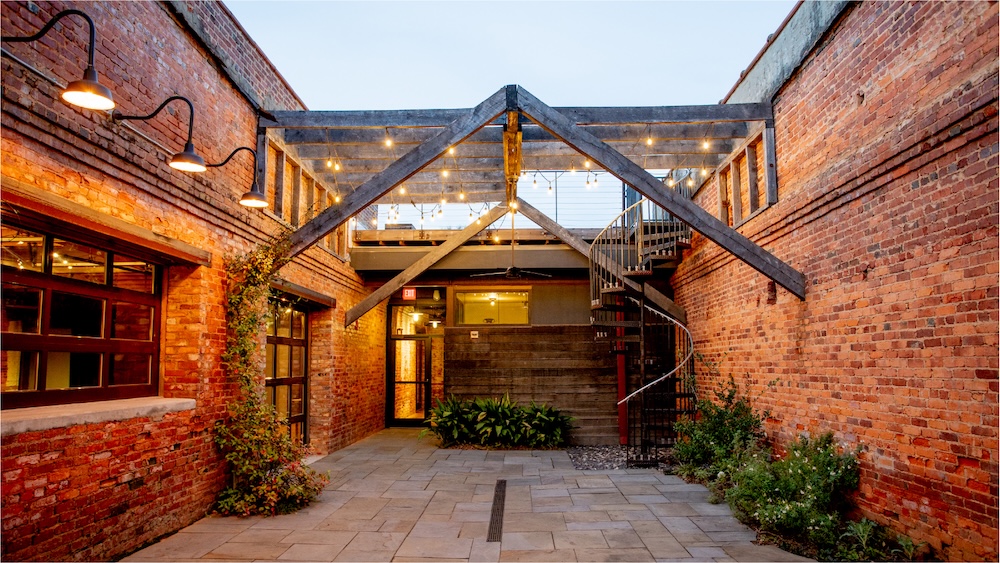
Architectural Collaborative is a highly respected architecture, interior design, and historical preservation firm that creates superior quality, inspirational design of spaces and places for the communities in which we work. Our studio operations and our work are forward-thinking, responsive to and respectful of community, culture, and environment.
CERTIFICATIONS

B Corp Certification
B Lab

Public Benefit Corporation
Legal Designation
COMMUNITY PARTNERS + AFFILIATIONS
“In the Anthropocene, with human powers of creation and destruction expanding dramatically, the awakening of a broader and deeper sense of shared ethical responsibility must be considered an especially critical component of any strategy for future well-being of people and planet.” -Stephen Rockefeller
As a company, we strive to implement sustainability measures into every aspect of our operation. However, as an individual company, we are a bubble if we only focus inward on our own operations and actions. Being part of the B Corporation community is an important part of our sustainability journey. Likewise, being an active participant in our own community’s well-being is part of our commitment.














IMPACT REPORTING
As a B Corp, we strive to be as transparent as possible. We use this page of our websiteas a transparent record for our stakeholders about our environmental and social impactgoals, our progress and action plan, and to highlight some of our annual impact metrics.
CUMULATIVE VOLUNTEER HOURS
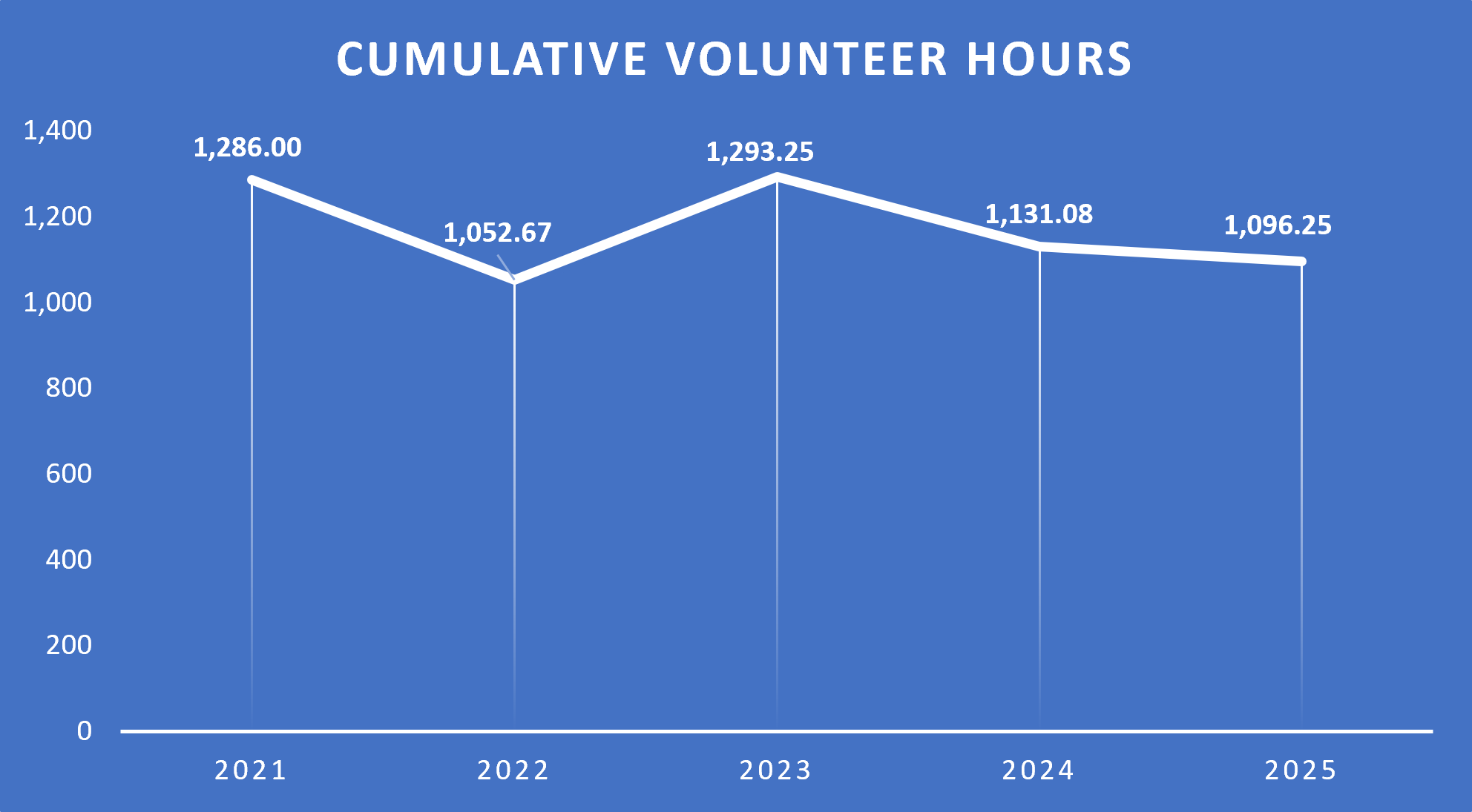
In 2025, Arcollab employees cumulatively logged 1,096 hours of volunteer service. 531of these hours were “on the clock.” The cumulative value of these service hours isequivalent to $17,729.
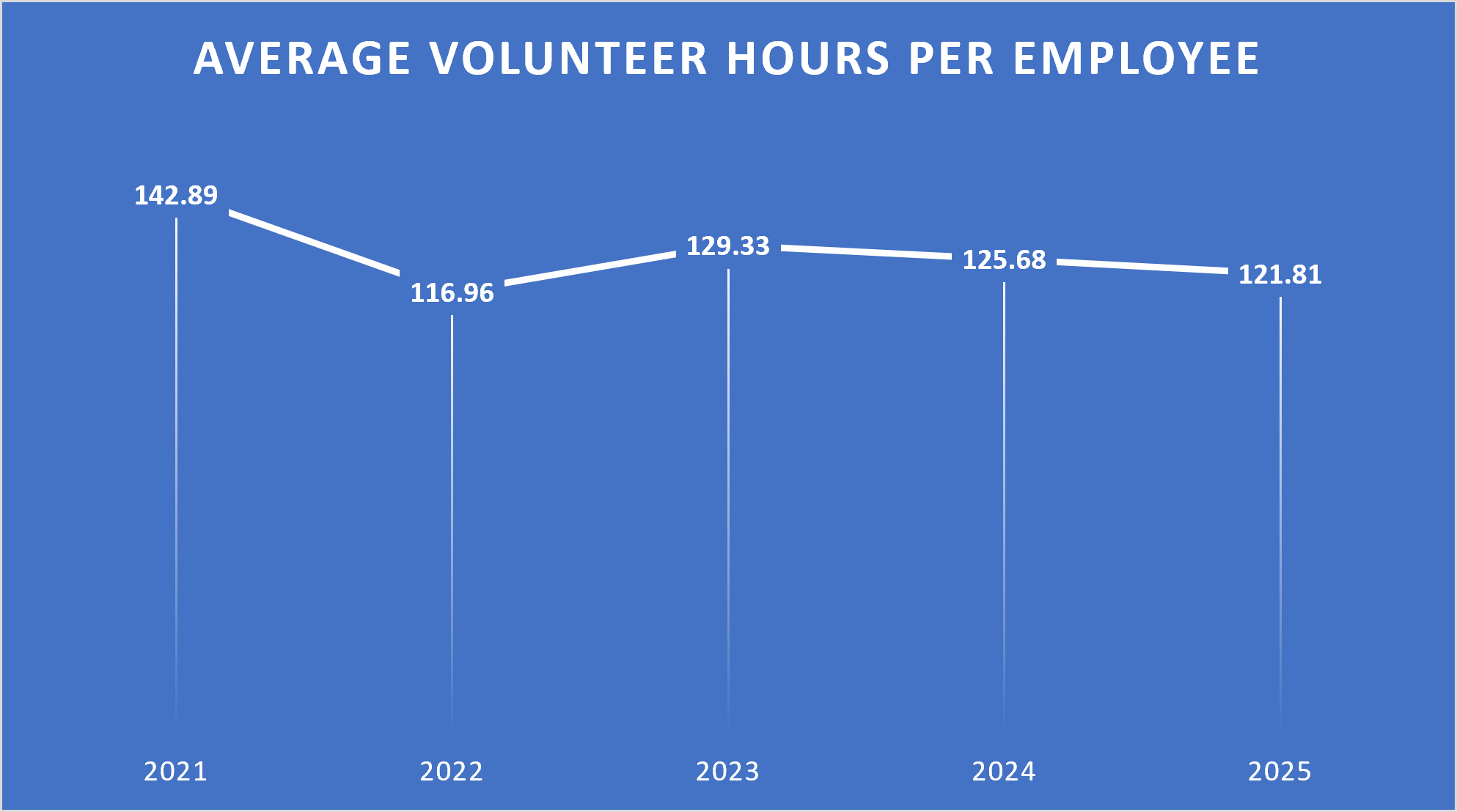
AVERAGE VOLUNTEER HOURS PER EMPLOYEE
On average, Arcollab employees each volunteer over 120 hours per year. Activities include serving on volunteer boards, participating in roadside and river trash cleanups,MLK Day of Service activities, pro-bono professional work, guest lectures and presentations, and volunteer academic contributions.
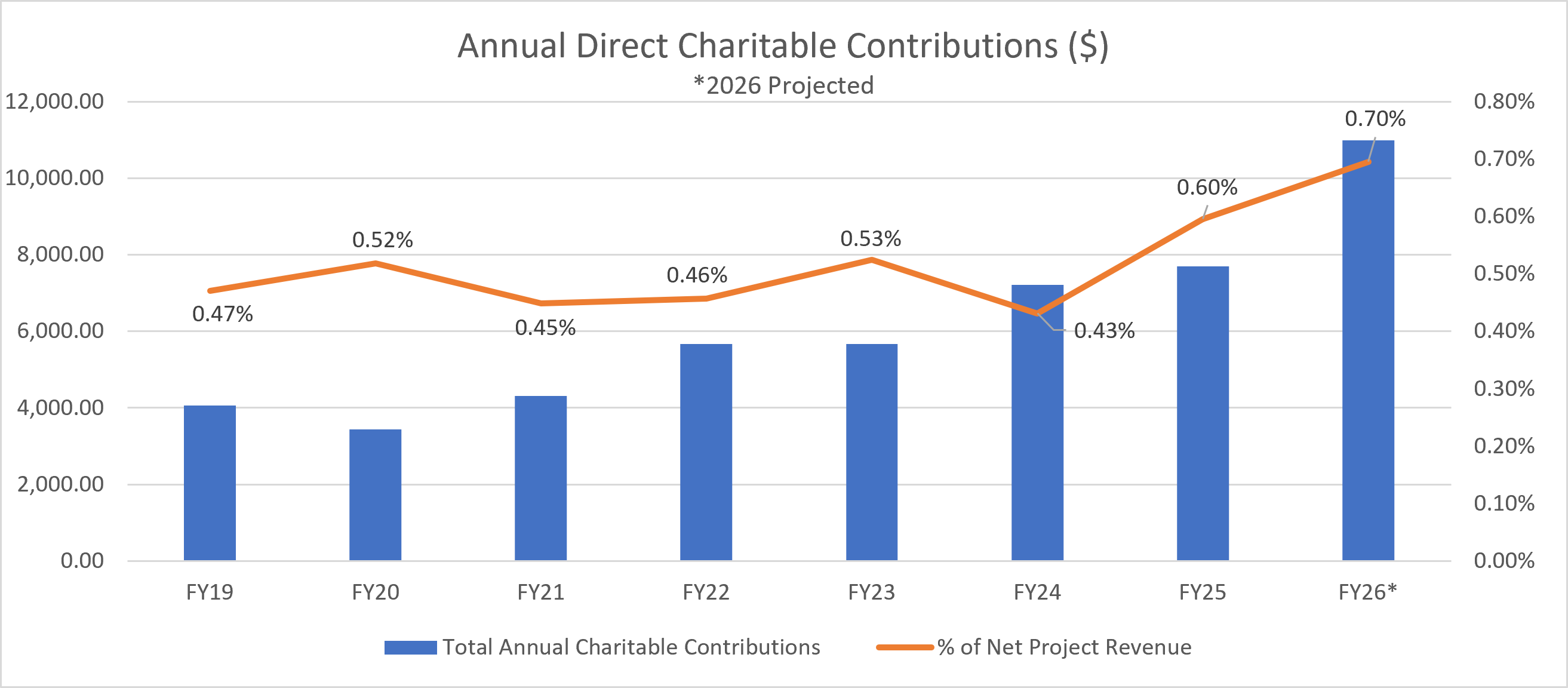
ANNUAL DIRECT CHARITABLE CONTRIBUTIONS
In addition to volunteer service, Arcollab designates direct charitable giving. The employee who volunteers the most hours each year directs $1,000 of this giving toward the local charity of their choice. In 2025, direct giving equaled 0.6% of total project revenue, and in 2026, direct giving is projected to reach 0.7% of total project revenue. Together with our pro-bono service hours, we strive to meet 1% goals.
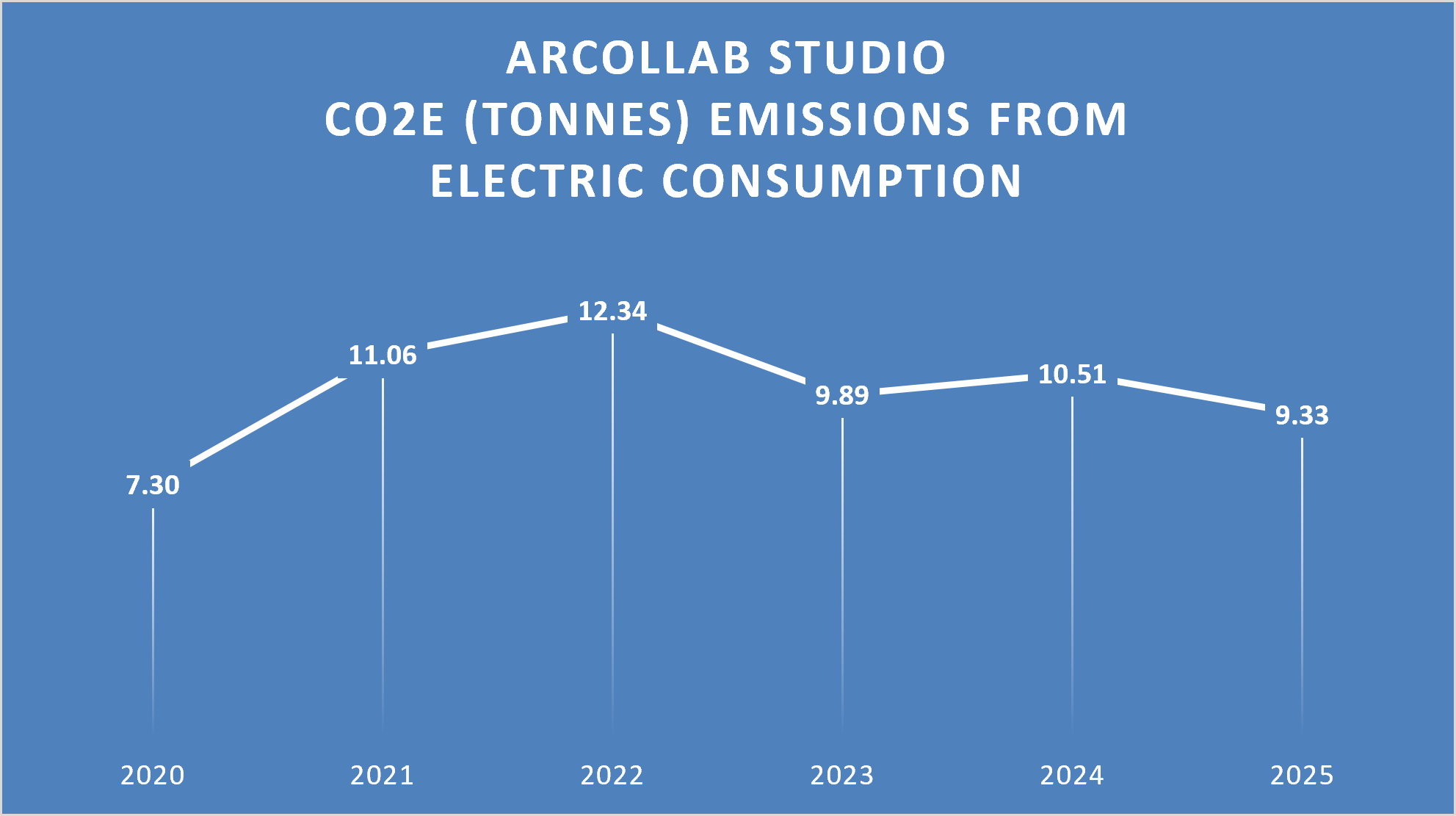
CO2 EMISSIONS FROM ELECTRIC
Arcollab’s GHG emissions from operations come primarily from our electric consumptionat the studio and travel-related emissions. Electric consumption is largely tied tocomputer use and to heating/cooling. Insulation, LED lighting, and glazing treatmentshave all helped to increase the energy efficiency of our studio. We aim to keepemissions from electricity use to less than 1.25 tonnes CO2e per person annually, toreducing use to the greatest extent possible, and to offsetting the balance.
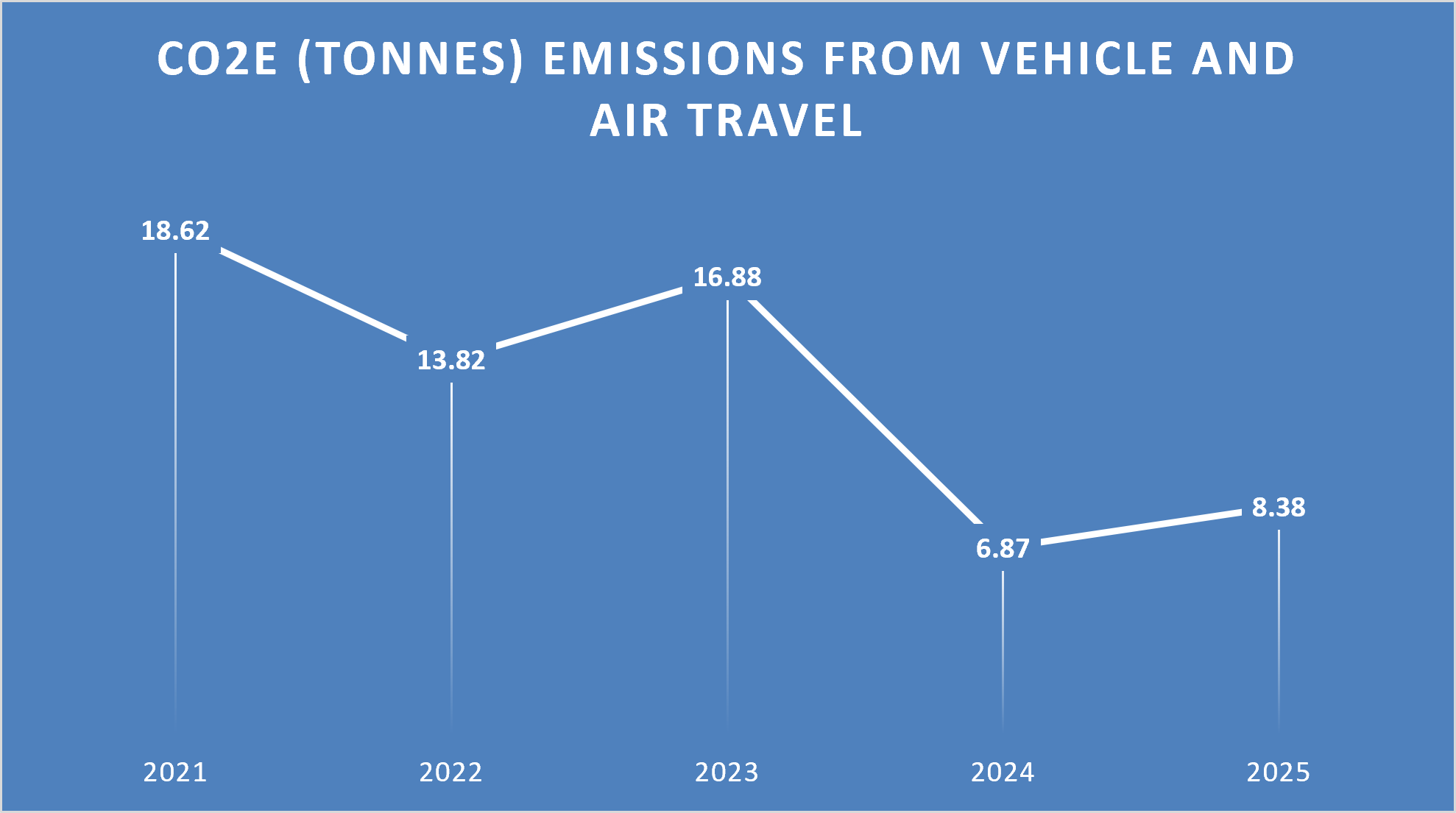
CO2e EMISSIONS FROM VEHICLE AND AIR TRAVEL
Arcollab uses the US Department of Energy / USEPA fuel economy calculator to get tailpipe greenhouse gas emissions (grams/mile) per vehicle for each of our employees and the ICAO Carbon Emissions Calculator to calculate emissions for all air travel. All miles for business-related travel are tracked on a monthly basis using internal reporting tools and annual tonnes of CO2e emissions associated with business travel are calculated for the office as a whole. Reductions between 2023-2024 reflect the impact of Arcollab’s three partners switching to electric and hybrid vehicles.
CO2e OFFSETS PURCHASED
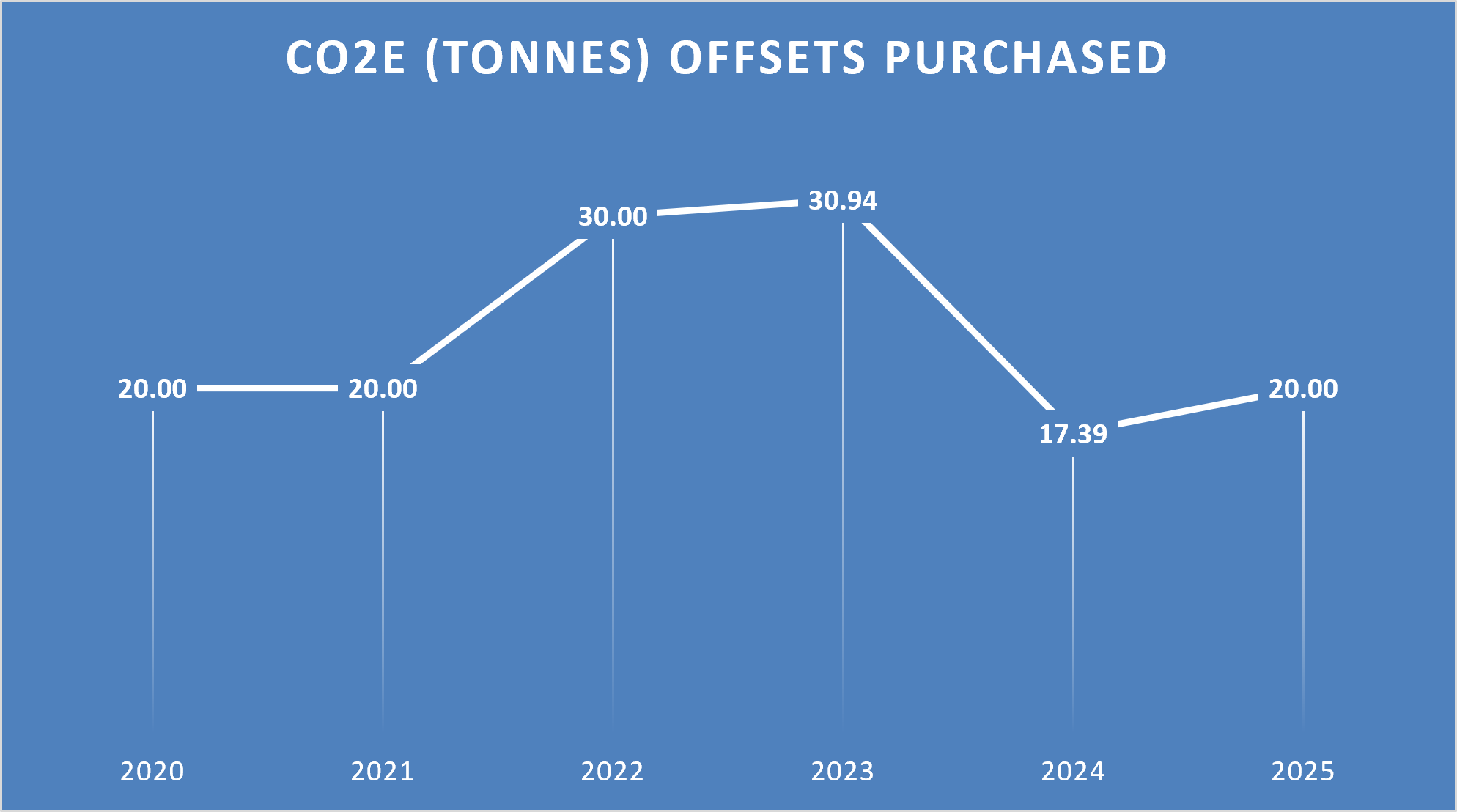
Arcollab has worked with both the Bonneville Environmental Foundation and PATCH to purchase carbon offsets on an annual basis since 2020. As we increase our efforts to measure more of our Scope 3 emissions, we will continue to purchase offsets for emission we cannot reduce with the ultimate goal of offsetting all annual emissions by 2027.
CARBON OFFSETS
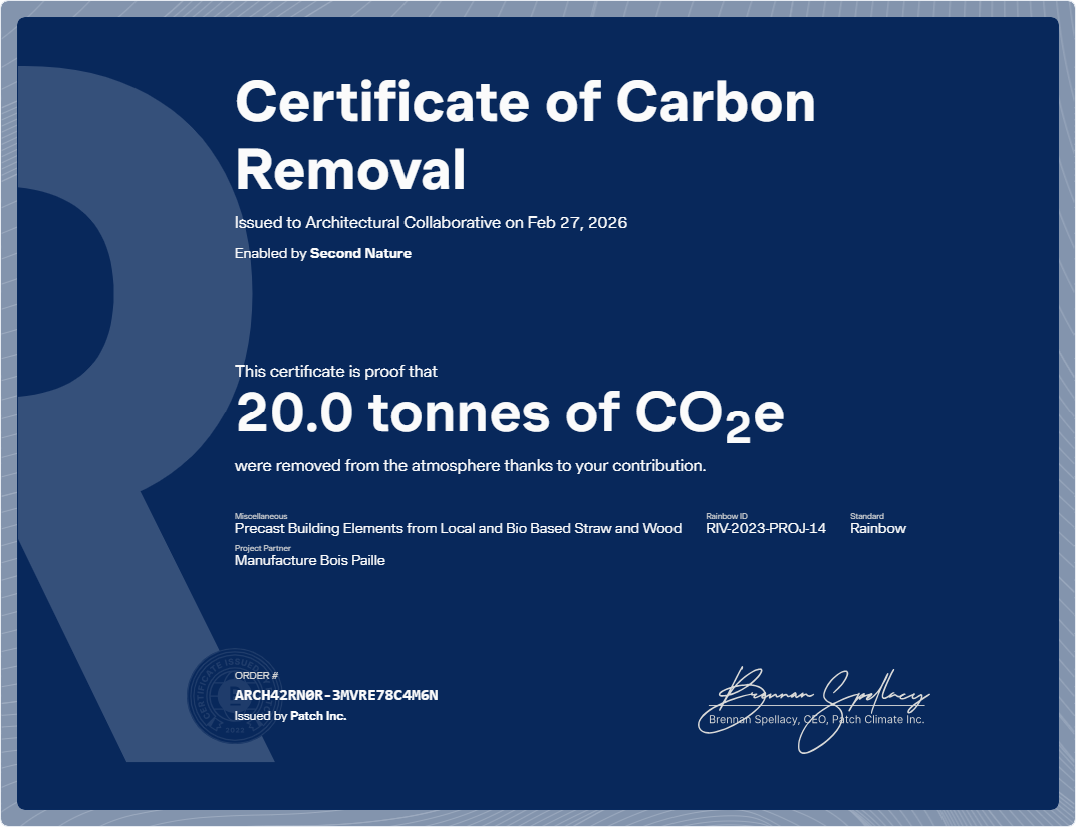
Arcollab annually purchases verified offsets for emissions that are not able to be reduced. For 2025, Arcollab purchased 20 tonnes CO2e of offsets through PATCH.
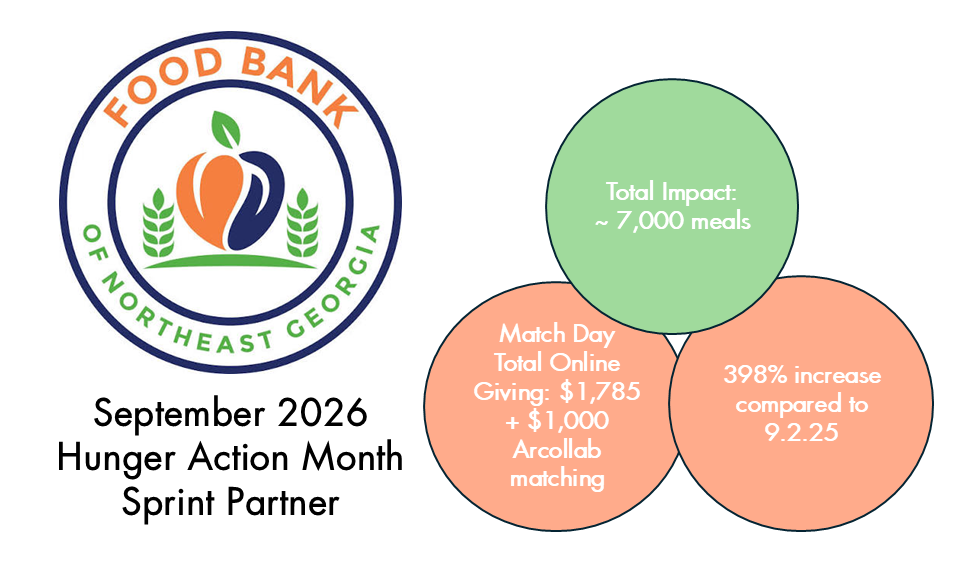
Arcollab’s community partnerships are a meaningful part of our overall impact as a company on the community in which we live. As an example of the impact that strategic giving partnerships can have, providing matching funding for campaigns can help generate significant ripple effects. In this specific instance, giving $1,000 turned into a 398% increase in online giving on our designated partner day for the Food Bank of Northeast Georgia, providing an estimated 7,000 meals for those in our greater community.
EMPLOYEE HEALTH INSURANCE PREMIUM COVERAGE
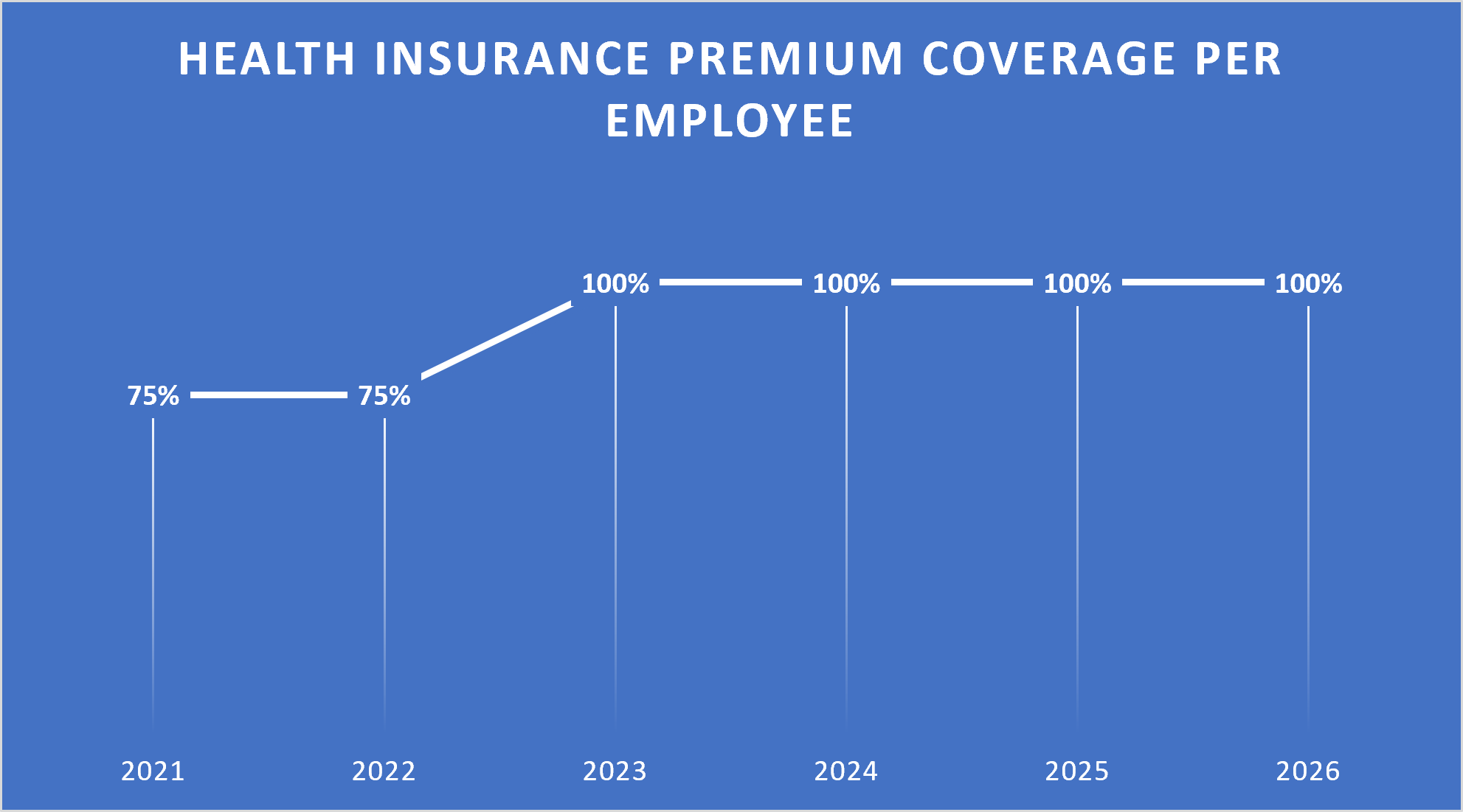
In January 2021, Arcollab began offering health insurance to all employees through the Athens Chamber of Commerce group plan. The Anthem/BCBS policy has low out of pocket max, low deductibles, and is widely accepted. Beginning August 2022, Arcollab began covering 100% of employee health care insurance premiums, a current value of $7,575/year per employee.
GOALS
Sustainability Goals + Climate Action Plan
As a certified B Corporation, we’ve worked hard to thoughtfully implement a wide variety of sustainability measures across the seven B Lab impact topics. We continually remind ourselves, as individuals and as a company, that we grow and improve the most when we engage in the interwoven process of both self-reflection and imagination of where we want to be. This process helps us learn from experience and direct our actions toward achieving our goals.
As we reflect on what we have accomplished in the seven impact topics to assess our impact, we also set goals and outline a road map for how to get there. Here, we present a few of our primary goals for the coming years and some of the steps we will take to get there. We have broken these out into two categories, Environmental Impacts and Social Impacts. These examples are not intended as an exhaustive list; even in areas where we are already meeting our goals, we look for opportunities to improve. Our full Sustainability Policy, including our Climate Action Plan, is available for review within the Policies & Disclosures section below. This policy is revisited and revised on an annual basis at a minimum.
We support the global ambition to limit global warming to 1.5°C above pre-industrial levels, in line with the Paris Agreement. As such, we support and participate in America is All In and are a signatory to the AIA 2030 Challenge. Our Climate Action Plan, including the four specific goals presented below, sets out the actions we are taking to reduce our greenhouse gas emissions across Scope 1, 2 and 3, the targets we hold ourselves to, and how we will report on progress.
Environmental Impacts
Goal 1: Formalize Climate Smart & Human Wellbeing design practices
Arcollab has developed an extensive internal Design Standards document. Furthermore, our Specifications Documents contain multiple provisions related to fixtures and finishes and installation performance, requiring that systems meet energy efficiency targets, that waste is recycled to the greatest extent possible during construction, that products listed on the Living Building Challenge Red List are not used, etc. While these guidelines have been developed thoughtfully and are used consistently, they are not formalized within our Design Standards and are not generally found in one cohesive location.
Action Plan:
- All-Staff meetings to review Arcollab sustainability policy and design guidelines and how we might formalize the integration of sustainable design best practices into our Design Standards and document sets. Two or three all-staff meetings and establish internal working group by 12.31.26.
- Working group will provide draft for all-staff review by 6.30.27
- Policy and practices will be incorporated into Design Standards and overall Sustainability Policy & Procedures by 12.31.27.
- Annual working group meetings, with recommendations presented to all-staff meetings and revisions by 12.31.28
Goal 2: Meet AIA 2030 requirements
Buildings account for nearly 40% of greenhouse gas emissions today—but they don’t have to. AIA’s Design Data Exchange (AIA DDx) lets Architecture, Engineering, and Construction professionals easily benchmark our projects against industry averages and track performance on our journey to a carbon neutral future.
Action Plan:
- Add 5 largest (by square foot) current projects to AIA DDx by 12.31.26
- Add all active projects in 2027 to AIA DDx by 12.31.27
- Review internal design standards and prioritize three actions which could enhance energy performance in the buildings we design by 6.30.27.
- Add all active projects in 2028 to AIA DDx by 12.31.28
- Review whether these three actions were implemented across projects, whether they were successful in improving efficiency, and if not implemented determine what were the reasons and how those might be addressed by 6.30.28.
- Review and revise internal design standards and prioritize additional one to three actions which could enhance energy performance in the buildings we design by 6.30.28.
- Add all active projects in 2029 to AIA DDx by 12.31.29
- Review Arcollab’s DDx portal and portfolio of projects and evaluate the progress in energy efficiencies that have been made since 2026, reasons targets are not achieved (if applicable), and areas for further improvement by 6.30.29.
- Add all active projects in 2030 to AIA DDx by 12.31.30
Goal 3: Develop a more robust internal carbon emissions calculator
Arcollab currently tracks emissions related to vehicle and plane travel as well as electric consumption at the studio. Offsets are purchased annually, adding a buffer to account for Scope 3 emissions that are not directly calculated (e.g., waste to landfill). To better track emissions, establish targets, and ensure that offsets cover what we cannot reduce or produce via renewable sources, Arcollab will develop a more robust carbon calculator.
Buildings account for nearly 40% of greenhouse gas emissions today—but they don’t have to. AIA’s Design Data Exchange (AIA DDx) lets Architecture, Engineering, and Construction professionals easily benchmark our projects against industry averages and track performance on our journey to a carbon neutral future.
Action Plan:
- Build a more robust carbon calculator to include the full suite of Scope 1, 2, and 3 emissions and include as much data as possible by 12.31.27
- Annually evaluate whether any new emission streams need to be added by 12.31
Goal 4: Measure waste to landfill and waste diverted through recycling and reuse
In order to track Scope 3 emissions and then establish achievable reduction targets for the waste
generated in our office’s operations, we must first establish a baseline. Our goal for
2027 is to carry out monthly monitoring to establish a baseline. Once this is established,
we can then evaluate sources of waste and develop a plan to set measurable targets
and implement reductions.
Action Plan:
- Monthly waste audits through 2027
- Waste stream evaluation and reduction plan completed by 3.31.28
- Continued monthly monitoring through 2028
- Evaluation and adjustments to reduction plan by 3.31.29
- Quarterly monitoring through 2029
- Evaluation and adjustments to reduction plan by 3.31.30
Social Impacts
Goal 1: Opportunities to improve employee benefits
Arcollab offers a robust employee benefit package. Currently, dental and vision insurance are not included.
Action Plan:
- Evaluate dental and vision insurance options with insurance agent by 8.01.27
- Evaluate employee interest and financial feasibility by 9.01.27
- If not feasible for 2027 insurance renewal in September 2027, repeat the above two steps in 2028.
SDG ALIGNMENT